Borehole Drilling Equipment: A Guide to Choosing the Right Machinery
Understand drilling rig types, ground conditions, equipment specifications and the key considerations involved in selecting machinery for water well and borehole projects.
Selecting borehole drilling equipment is an important decision for contractors, water infrastructure developers, agricultural operators and businesses involved in groundwater projects. The right machinery must be capable of addressing the geological conditions, drilling requirements and operational demands of the intended site.
Borehole drilling involves more than simply choosing a rig with sufficient power. Drilling depth, formation characteristics, borehole diameter, drilling method, site accessibility and the equipment's supporting systems all influence the selection process.
A machine designed for relatively straightforward ground conditions may not be appropriate for a project involving hard rock, unstable formations or restricted access. Similarly, a drilling rig intended for a particular application may not provide the flexibility required for a different project.
This guide examines the main types of borehole drilling equipment, explains the factors that influence machinery selection and outlines the questions businesses should consider before investing in drilling equipment.
1. Understanding Borehole Drilling Equipment
Borehole drilling equipment refers to the machinery, tools and supporting systems used to create a drilled opening in the ground for applications such as groundwater exploration, water well construction, geotechnical investigation and other specified drilling activities.
For water well projects, drilling equipment must be selected according to the anticipated geological formation, required borehole dimensions, intended depth and the construction method planned for the well.

What makes up a drilling system?
A complete drilling operation may involve several interconnected components:
- Drilling rig: Provides the structure, power and mechanical systems needed to perform the drilling operation.
- Drill rods: Connect the drilling system to the drilling tool and transmit the required rotational or percussive action, depending on the method.
- Drill bits: Interact with the geological formation to break, cut or penetrate the ground.
- Air or fluid circulation systems: Support the removal of drilling cuttings and other drilling-process requirements, depending on the method used.
- Power system: Supplies the energy required by the rig and its operating systems.
- Support equipment: May include compressors, pumps, water tanks, mud systems and material-handling equipment, depending on the drilling configuration.
The precise equipment combination depends on the drilling method, geological conditions and project specifications.
2. Common Types of Borehole Drilling Rigs
Drilling rigs are available in different configurations, each intended to support particular drilling methods and working conditions. Understanding the differences helps buyers narrow down the machinery options suitable for their projects.

Water Well Drilling Rigs
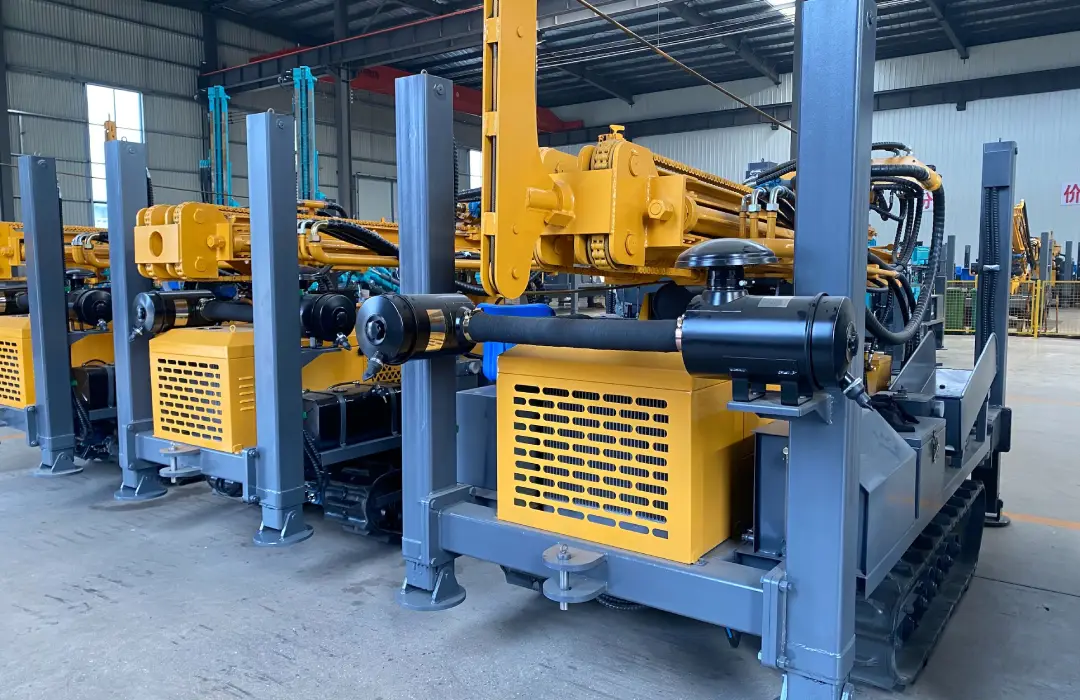
Water well drilling rigs are designed for drilling boreholes intended to access groundwater. Their configuration, drilling method and available capacity vary according to the manufacturer and intended application.
When comparing these machines, examine drilling depth ratings, borehole diameter range, available drilling methods, power requirements and supporting equipment compatibility.
Explore borehole drilling equipment
Truck-Mounted and Trailer-Mounted Rigs
Some drilling rigs are mounted on trucks or trailers to support transportation between project locations. The appropriate arrangement depends on the machine's dimensions, weight, mobility requirements and the accessibility of the drilling site.
Buyers should consider transport regulations, site access, stabilisation arrangements and the equipment required to position the rig safely.
View drilling equipment optionsCompact and portable drilling rigs
Compact drilling rigs may be suitable for projects where access is restricted or where a larger rig would be difficult to transport or position. Their capabilities vary significantly, so buyers should compare drilling depth, diameter, available power and the formations for which the machine is designed.
Heavy-duty drilling rigs
Heavy-duty rigs are intended for applications requiring particular drilling capacities or operating configurations. Depending on the model, they may be equipped for deeper drilling, larger borehole dimensions or more demanding ground conditions.
Do not assume that a larger rig is automatically the best option. Its specifications must correspond with the actual project requirements.
3. Understanding Different Drilling Methods
The drilling method is one of the most important factors in selecting borehole machinery. Different techniques are suited to different geological formations, borehole requirements and project conditions.
Rotary drilling
Rotary drilling uses rotational movement to advance a drill bit through the ground. Depending on the system, drilling fluid or air may be used to support cuttings removal and other aspects of the drilling process.
Rotary methods are used in a range of drilling applications, but the specific bit, circulation arrangement and rig configuration must be selected according to the formation and project design.
Down-the-hole hammer drilling
Down-the-hole, commonly abbreviated as DTH, drilling uses a hammer mechanism positioned near the drill bit to deliver percussive energy to the formation. Rotation is also applied as the drilling progresses.
DTH systems are frequently considered for hard-rock drilling applications. Their suitability depends on the geological formation, required borehole dimensions, compressor capacity and the specifications of the complete drilling system.
Air rotary drilling
Air rotary drilling uses compressed air to support the drilling process and remove cuttings from the borehole. The rig, compressor, drill string and drilling tools must be matched to the intended depth, diameter and ground conditions.
Mud rotary drilling
Mud rotary drilling uses a circulating drilling fluid to support the drilling process. The fluid can assist in carrying cuttings to the surface and maintaining borehole conditions, depending on the formation and drilling programme.
This method requires suitable fluid circulation and handling arrangements, including the necessary pumps, tanks and solids-management equipment.
| Drilling method | General operating principle | Important selection considerations |
|---|---|---|
| Rotary drilling | Rotational action advances the drill bit through the formation | Bit type, formation, circulation system and borehole specifications |
| Down-the-hole hammer | Percussive hammer action near the drill bit, combined with rotation | Rock conditions, compressor capacity, hammer and bit compatibility |
| Air rotary | Compressed air supports drilling and cuttings removal | Air supply, drilling depth, formation and equipment configuration |
| Mud rotary | Circulating drilling fluid supports cuttings removal and borehole management | Fluid properties, circulation equipment and formation conditions |
These methods are not interchangeable in every situation. A qualified drilling professional should assess the geology and project specifications before recommending a particular technique.
4. Why Geological Conditions Matter When Choosing a Drilling Rig
Ground conditions have a direct influence on drilling performance, tool selection, equipment requirements and the drilling method that may be appropriate for a project.
Before selecting machinery, obtain as much reliable geological information as possible. This may include geological surveys, existing borehole records, site investigations and information from previous drilling activities in the surrounding area.
Soft and unconsolidated formations
Sand, gravel, loose sediments and other unconsolidated formations can present challenges relating to borehole stability and the removal of drilling cuttings.
Depending on the formation, casing arrangements, drilling fluids and other borehole-support methods may be required. The equipment must be compatible with the selected construction method.
Clay and mixed formations
Clay-rich and mixed geological formations can affect drilling progress, cuttings handling and borehole stability. Their behaviour varies according to moisture content, composition and geological structure.
The drilling method and fluid-management arrangements should be selected with these conditions in mind.
Hard-rock formations
Hard-rock formations may require specialised drilling tools and equipment capable of delivering the necessary cutting or percussive action. DTH systems are among the methods that may be considered, depending on the formation and project requirements.
Variable geological conditions
Some drilling locations contain several different geological layers. A project may encounter loose surface materials followed by clay, gravel or hard rock at greater depth.
In these situations, the drilling programme may need to account for changing formation characteristics. Equipment flexibility, available tools and the ability to adapt the drilling method can become important purchasing considerations.
5. Key Specifications to Compare Before Buying
Drilling rig specifications provide the technical information needed to assess whether a machine can meet a project's requirements. Buyers should compare complete machine configurations rather than relying on a single headline specification.
Maximum drilling depth
Drilling depth is an important starting point, but the stated maximum must be interpreted in the context of the manufacturer's operating conditions, drilling method, drill rod arrangement and borehole dimensions.
Ask the supplier how the stated depth rating relates to the intended drilling configuration. A maximum depth figure should not be treated as a guaranteed performance result for every geological formation.
Borehole diameter
The required borehole diameter influences drill bit selection, casing arrangements and the equipment needed for the drilling operation.
Confirm the machine's supported diameter range and the conditions under which those specifications apply.
Drilling force and rotational performance
Depending on the machine design, relevant specifications may include rotary torque, rotational speed, feed force, pullback force and percussion performance.
These specifications should be evaluated against the drilling method, tools and anticipated formation rather than compared without considering the complete system.
Power system
Review engine output, power requirements, hydraulic systems and any supporting equipment needed to operate the rig. Where compressed air is required, compressor capacity and compatibility should also be assessed.
Dimensions, weight and mobility
Machine dimensions and operating weight influence transportation, site access, positioning and ground-support requirements. A drilling rig must be practical to deliver and set up at the intended project location.
Drill rod and tool compatibility
Confirm the compatible drill rod dimensions, connection types, bit arrangements and available tooling. These components must match the rig and the selected drilling method.
| Specification | Why it matters | What to confirm |
|---|---|---|
| Drilling depth | Determines whether the rig is suitable for the planned depth | Rated depth and conditions behind the rating |
| Borehole diameter | Influences drilling tools and well construction | Supported diameter range and configuration |
| Rotary torque and speed | Relevant to the drilling method and tool operation | Performance specifications and operating range |
| Feed and pullback force | Influences drill string handling and drilling operation | Manufacturer-rated force specifications |
| Power and compressor requirements | Determines the supporting power infrastructure | Engine output, air demand and compatibility |
| Transport dimensions | Affects access, delivery and site positioning | Overall dimensions, weight and transport arrangements |
6. Supporting Equipment Required for Borehole Drilling
A drilling rig is only one part of a complete borehole drilling operation. Depending on the method and site conditions, additional equipment may be required to supply power, circulate drilling fluids, remove cuttings and support well construction.
Air compressors
Some drilling configurations require compressed air for drilling operations, hammer systems or cuttings removal. Compressor selection should be based on the required operating pressure and air delivery capacity of the complete system.
Check that the compressor specification is suitable for the drill rig, down-the-hole hammer and other connected equipment. An unsuitable air supply can affect system performance.
Drilling fluid pumps and tanks
Where mud rotary or another fluid-based drilling method is used, suitable pumps, tanks, hoses and fluid-handling equipment may be required.
The circulation system should be designed to support the drilling programme and the characteristics of the formation being drilled.
Drill rods and drilling tools
Drill rods, bits, hammers and other tools must be compatible with the rig and selected drilling method. Their dimensions, connections, wear characteristics and operating specifications should be confirmed before purchase.
Casing and well construction materials
Depending on the geological conditions and well design, casing and other construction materials may be required to support the borehole and protect the completed well.
The required dimensions and materials should be established through the project's technical design and applicable groundwater or water-well construction requirements.
Water pumps and testing equipment
Once drilling and well construction have been completed, appropriate equipment may be needed for development, pumping tests and assessment of the completed borehole.
The equipment selected for these activities depends on the well design, intended use and testing programme.
7. Applications of Borehole Drilling Machinery
Borehole drilling equipment is used across several sectors where groundwater access, subsurface investigation or other drilling activities are required.
Domestic and community water supply
Drilling rigs may be used to construct boreholes for domestic or community water supply projects. The drilling programme must account for local geology, groundwater conditions, well construction requirements and applicable water-quality considerations.
Agriculture and irrigation
Agricultural businesses may require groundwater sources to support irrigation, livestock operations and other farm activities. The appropriate drilling equipment depends on the project location, intended water demand and available geological information.
Commercial and industrial water supply
Businesses and industrial facilities may commission boreholes where groundwater forms part of their planned water-supply arrangements. Drilling depth, required yield, water quality and the relevant regulatory requirements should be assessed as part of project planning.
Infrastructure and construction
Some infrastructure and construction projects require drilling for groundwater investigation, site assessment or specialised subsurface applications. The rig and drilling method must be selected according to the technical purpose of the work.
Geotechnical and investigation work
Drilling equipment may also be used in ground investigation activities, although these projects can require different tools, procedures and rig configurations from conventional water well drilling.
It is important to distinguish water well drilling machinery from equipment designed primarily for other geotechnical or exploration applications when comparing available models.
8. How to Choose the Right Borehole Drilling Rig
Before requesting a quotation, establish a clear understanding of the project. This allows suppliers to assess the required machine configuration and identify any additional equipment needed.
Define the intended application
Determine whether the equipment will be used for domestic water wells, community water projects, agricultural irrigation, commercial supply or another drilling activity.
Different applications can involve different drilling depths, borehole dimensions, construction methods and operating requirements.
Establish the geological conditions
Review available geological records and site information. Where necessary, seek advice from qualified hydrogeological or drilling professionals to assess the anticipated formations and groundwater conditions.
Determine the drilling method
Identify the drilling method appropriate to the expected formation and project design. Confirm that the proposed rig, drill tools, compressor or fluid circulation equipment can operate as a compatible system.
Calculate the complete equipment requirement
Do not assess the rig in isolation. Include drill rods, bits, compressors, pumps, fluid-handling equipment and other necessary accessories in the procurement specification.
Consider transportation and site access
Check the route to the drilling location, available working space, ground conditions and any access restrictions. The rig must be transportable and capable of being positioned appropriately at the site.
Review maintenance and after-sales support
Assess routine service requirements, replacement parts, technical documentation and the availability of competent support. These factors are particularly important for businesses intending to operate drilling machinery regularly.
9. Common Mistakes to Avoid When Buying Drilling Equipment
Drilling equipment is a specialised investment. A purchasing decision based on incomplete technical information can result in a machine that is unsuitable for the intended work.
Choosing a rig based only on maximum drilling depth
Maximum depth is important, but it does not establish whether a rig can drill the required diameter through the anticipated formation using the selected method. Assess the full operating specifications.
Ignoring geological information
Assuming that all sites have similar ground conditions can lead to inappropriate equipment selection. Obtain geological information and consider the possibility of changing formations.
Overlooking supporting equipment
A drilling rig may require compressors, pumps, rods, bits and other accessories. Confirm the complete system requirement before comparing quotations.
Failing to confirm component compatibility
Drill rods, bits, hammers, compressors and connections must be compatible with the selected equipment. Verify specifications with the manufacturer or supplier.
Underestimating transport and site preparation
Equipment dimensions, weight, access routes and ground conditions can affect the practical delivery and positioning of the rig. Include these requirements in the project plan.
Overlooking maintenance and parts support
Consider how the machine will be serviced and where compatible replacement components can be obtained. Technical support should be part of the procurement assessment.
10. Borehole Drilling Equipment Purchasing Checklist
Use the following checklist to prepare your equipment enquiry and compare available drilling rig configurations.
- Define the drilling application and intended project outcome.
- Identify the expected drilling depth and required borehole diameter.
- Gather available geological and site information.
- Determine the drilling method appropriate to the project.
- Check rotary, feed, pullback or percussion specifications as applicable.
- Confirm the power system and supporting compressor or pump requirements.
- Verify drill rod, bit and tool compatibility.
- Assess rig dimensions, operating weight and transport requirements.
- Identify casing and other well construction requirements.
- Review service intervals, spare parts and technical support.
- Confirm applicable regulatory and environmental requirements.
- Request a detailed quotation covering the intended machine configuration.
11. Choosing Equipment That Matches Your Drilling Project
Selecting the right borehole drilling equipment requires a clear understanding of the intended application, geological conditions, drilling method and complete equipment requirements.
Water well drilling rigs, compact drilling machines and other specialised configurations serve different operational needs. Their suitability should be assessed through technical specifications, supporting equipment compatibility, site accessibility and the requirements of the planned borehole.
For contractors and businesses investing in drilling machinery, a well-prepared equipment specification can make the procurement process more effective and help reduce the risk of selecting a machine that does not match the project.
Braethorn Machinery provides access to a range of equipment categories for businesses and operators evaluating machinery for different applications. Explore our borehole drilling equipment range to review the category and discuss your requirements.
Looking for Borehole Drilling Equipment?
Share your intended drilling application, required depth, anticipated ground conditions and equipment specifications with Braethorn Machinery. Our team can discuss your enquiry and the available equipment options relevant to your project.
Contact Our TeamFrequently Asked Questions About Borehole Drilling Equipment
What equipment is used for borehole drilling?
Borehole drilling operations commonly use a drilling rig, drill rods, drill bits and supporting systems. Depending on the drilling method, additional equipment may include air compressors, pumps, fluid tanks and other accessories.
What is the difference between a borehole drilling rig and a water well drilling rig?
The terms are sometimes used broadly to describe drilling machinery. A water well drilling rig is intended for drilling wells to access groundwater, while borehole drilling equipment can cover a wider range of drilling applications. The actual machine specification and intended use should always be checked.
Which drilling method is suitable for hard rock?
Down-the-hole hammer drilling is one method commonly considered for hard-rock applications. Its suitability depends on the geological formation, required borehole dimensions, compressor capacity and complete equipment configuration.
What drilling rig specifications should I compare?
Important specifications include drilling depth, borehole diameter, rotary torque, rotational speed, feed force, pullback force, power requirements, machine dimensions and compatibility with drilling tools and supporting equipment.
Does every borehole drilling rig require an air compressor?
No. Compressor requirements depend on the drilling method and machine configuration. Some systems use compressed air, while others rely on drilling fluid circulation or different arrangements.
Can one drilling rig operate in different geological formations?
Some rigs can be configured for different formations using appropriate tools and drilling arrangements. However, the machine's capabilities and the suitability of the selected method must be confirmed for each application.
What information should I provide when requesting a drilling rig quotation?
Provide the intended application, target depth, required borehole diameter, available geological information, preferred drilling method, project location and any transportation or site-access restrictions.
Why is geological information important before purchasing a drilling rig?
Geological information helps determine the drilling method, tools and equipment configuration appropriate for the expected formations. It also assists with planning for borehole stability and cuttings removal.
How do I choose between a compact and a larger drilling rig?
Consider the required depth and diameter, geological conditions, available working space, transport requirements, power needs and expected workload. The most suitable machine is the one whose specifications match the project, not necessarily the largest available rig.
Explore Related Machinery and Resources
Continue exploring Braethorn Machinery's equipment categories and practical resources:


