The Complete Guide to Choosing the Right Mini Tractor for Your Farm
Explore mini tractor types, agricultural applications, essential specifications and attachments to help you select the right compact tractor for your farming requirements.
Choosing the right tractor is an important decision for any agricultural operation. Whether you manage a small farm, cultivate crops, maintain an estate or undertake general land management, the right machinery can make everyday tasks more manageable.
Mini tractors provide a compact alternative to larger agricultural tractors. They are considered for a variety of farming and property-maintenance applications, including soil preparation, mowing, transport, cultivation and selected material-handling tasks.
However, choosing a mini tractor involves more than comparing purchase prices or engine power. Buyers need to consider land size, terrain, implements, transmission, traction, hydraulic requirements and the type of work the tractor will perform.
This guide explains the different types of mini tractors, their applications, important specifications and the factors to consider before making a purchase.
What Is a Mini Tractor?
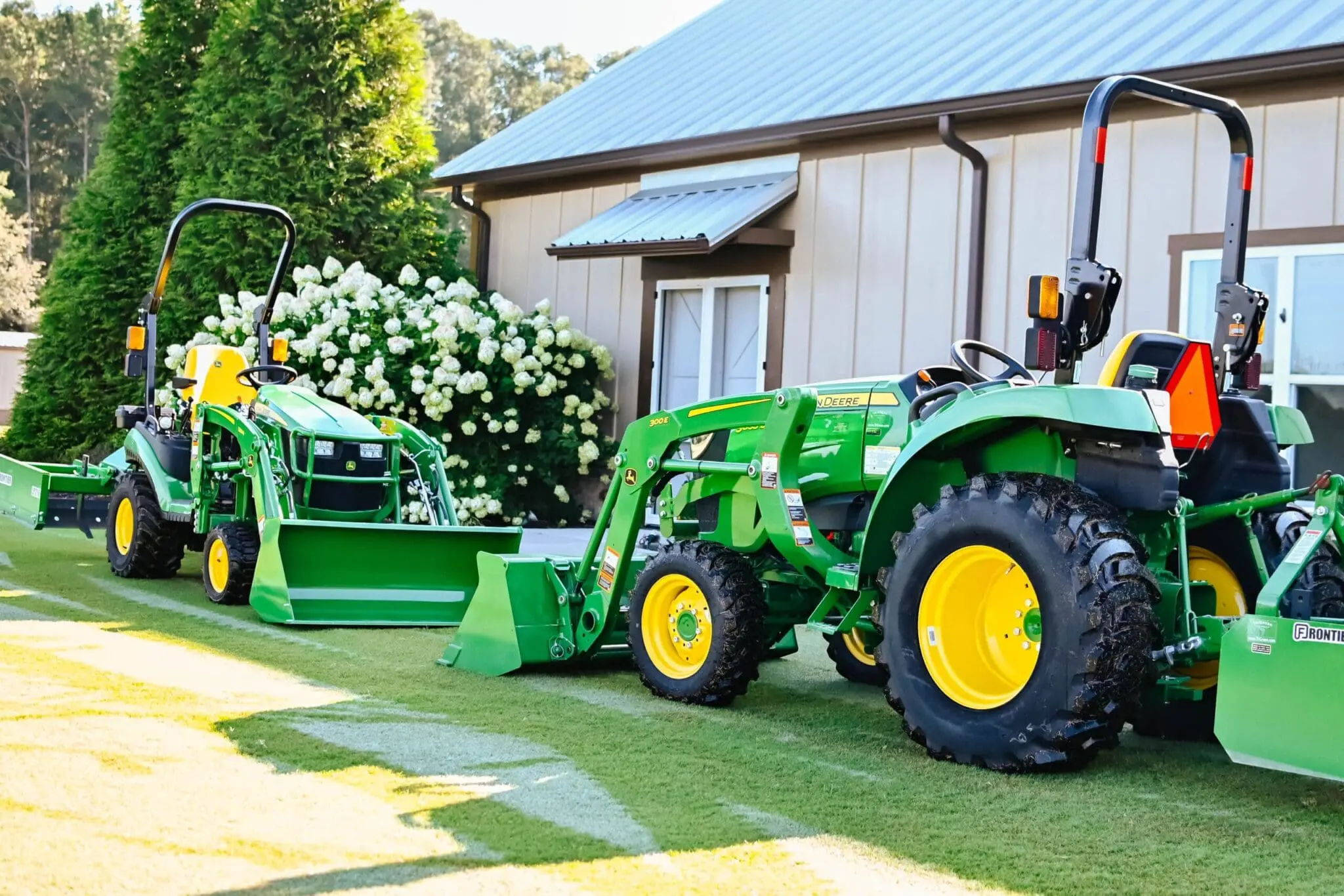
A mini tractor is a compact agricultural or utility tractor designed to perform selected farming and land-maintenance activities within a relatively small machine footprint.
Compared with larger agricultural tractors, mini tractors are generally intended for smaller-scale operations and applications where manoeuvrability and machine dimensions are important.
Depending on the model, a mini tractor may be equipped with a three-point linkage, power take-off (PTO), hydraulic outlets and different transmission arrangements. These features determine which implements and attachments the machine can operate.
Mini tractors are available in different configurations for agricultural work, grounds maintenance and general utility applications. The exact capabilities depend on the manufacturer and model.
Types of Mini Tractors for Agricultural Use
Mini tractors are available in different configurations. Understanding their intended applications will help you identify a machine that suits your land, workload and operating conditions.


Compact Mini Tractors
Compact mini tractors are designed for selected agricultural, landscaping and property-maintenance applications. Their smaller dimensions can be useful when working in restricted spaces or around obstacles.
Potential applications include:
- Grass cutting and grounds maintenance.
- Light cultivation and soil preparation.
- Small-scale transport tasks.
- Property and estate maintenance.
- Operation of compatible agricultural implements.
Agricultural Mini Tractors
Agricultural mini tractors are intended for farming-related tasks and can be supplied with features designed to support cultivation, implement operation and general farm work.
Depending on the model, they may support compatible ploughs, cultivators, trailers, rotary tillers, mowers and other implements.
Buyers should verify the tractor's power output, PTO specifications, linkage capacity and hydraulic compatibility before selecting implements.
What Can You Use a Mini Tractor For?
A suitable mini tractor can perform a range of farming and land-management tasks. Its versatility depends on the machine's specifications and the implements it can operate.
Soil Preparation
Compatible cultivation implements can help prepare soil for selected planting and agricultural activities.
Grass Cutting
Suitable mower attachments can support grass maintenance across farms, estates and other outdoor properties.
Material Transport
Compatible trailers can be used for selected farm transport tasks, subject to towing and load limits.
Cultivation
Appropriate cultivation equipment can support selected soil-working applications.
Estate Maintenance
Compact tractors can be considered for maintaining large gardens, grounds and private properties.
General Farm Operations
Depending on their configuration, mini tractors can support various routine farm activities.
The right implement and tractor configuration should always be selected according to the work being undertaken.
Benefits of Using a Mini Tractor on Your Farm
Compact Operating Dimensions
A compact tractor can be useful where the working environment includes narrow access routes, smaller fields, established landscaping or restricted turning areas.
Manoeuvrability
Smaller dimensions can make it easier to position the machine around buildings, trees, boundaries and other obstacles, depending on its turning characteristics.
Implement Versatility
Compatible implements can allow a mini tractor to undertake different tasks throughout the year. This may make it a useful multi-purpose machine for certain smaller agricultural operations.
Practical for Smaller Farms
For some small farms and agricultural properties, a compact tractor may provide suitable capability without the dimensions of a larger agricultural unit.
Property and Grounds Maintenance
Mini tractors can also be considered for maintaining estates, grass areas and outdoor properties when equipped with suitable attachments.
Flexible Seasonal Applications
Depending on the implements available, a tractor may support different activities across planting, cultivation, grass maintenance and general property work.
How Much Horsepower Does Your Mini Tractor Need?
Engine power is one of the most important considerations when choosing a mini tractor. However, horsepower should not be considered in isolation.
The appropriate power output depends on the size of the land, soil conditions, implement requirements, terrain and workload.
Smaller-Scale Agricultural Tasks
Lighter agricultural and grounds-maintenance tasks may be suitable for a smaller tractor configuration, provided it meets the implement manufacturer's requirements.
General Farm Work
More demanding routine farm applications may require additional power and suitable transmission, traction and hydraulic capabilities.
Demanding Implement Operation
Implements that require substantial PTO power, hydraulic flow or drawbar performance may require a more capable tractor. Always compare implement requirements with the tractor's specifications.
Important Mini Tractor Specifications to Compare
A tractor's suitability depends on several interconnected specifications. The following features deserve attention before making a purchase.
Engine Power
Compare the manufacturer's stated engine power and understand how it relates to the intended agricultural workload.
Transmission Type
Transmission arrangements affect how power is delivered to the wheels and how the tractor is controlled. Different models may offer manual, hydrostatic or other transmission options.
Two-Wheel Drive or Four-Wheel Drive
Traction requirements should be assessed against the farm's terrain, soil conditions and expected workload.
Four-wheel-drive configurations may be useful in certain conditions, but the correct choice depends on the manufacturer's design and the intended application.
Power Take-Off (PTO)
The PTO transfers power from the tractor to compatible implements. Check the available PTO speed, output specifications and operating requirements.
Three-Point Linkage
The three-point linkage is used to attach and control compatible mounted implements. Check the linkage category, lift capacity and compatibility with intended equipment.
Hydraulic System
Hydraulic output and available connections determine whether the tractor can operate compatible hydraulic implements and attachments.
Ground Clearance and Dimensions
Overall width, length, height and ground clearance influence site access and suitability for different agricultural environments.
Tyre Configuration
Tyre type and dimensions influence traction, ground contact and suitability for particular surfaces and applications.
Two-Wheel Drive vs Four-Wheel Drive Mini Tractors
One of the important decisions when selecting a mini tractor is choosing between two-wheel drive and four-wheel drive. Each configuration has different operating characteristics.
| Consideration | Two-Wheel Drive | Four-Wheel Drive |
|---|---|---|
| Driven wheels | Power delivered to two wheels | Power delivered to all four wheels |
| Traction | Depends on rear or front drive configuration and ground conditions | Can provide additional traction in suitable conditions |
| Applications | Suitable for selected lighter-duty applications and appropriate terrain | Often considered for more demanding traction requirements |
| Ground conditions | Best assessed against firm, suitable working surfaces | May be advantageous on certain softer or uneven surfaces |
| Selection priority | Workload, cost and operating environment | Traction, terrain and workload requirements |
Four-wheel drive does not make a tractor suitable for every terrain or gradient. Always follow the manufacturer's operating limitations.
Mini Tractor Attachments and Implements
Implements can significantly expand the applications of a mini tractor. However, compatibility depends on PTO power, hydraulic specifications, linkage capacity and the tractor's rated operating limits.
Rotary Tillers
Rotary tillers are used for selected soil-preparation and cultivation applications. Match the implement's power requirements with the tractor's PTO output.
Ploughs
Compatible ploughs can support soil-turning operations. Selection should account for soil type, working width and tractor capability.
Rotary Mowers
Suitable rotary mower attachments can be used for grass and vegetation maintenance across selected agricultural and outdoor properties.
Trailers
Compatible trailers can assist with moving farm materials and equipment. Confirm towing capacity, braking arrangements and applicable operating restrictions.
Cultivators
Cultivators can be used for selected soil-working activities. Their operating requirements must match the tractor's capabilities.
Front Loaders
Certain mini tractors can be configured with compatible front loaders for selected material-handling tasks. Review the manufacturer's lifting capacity and attachment requirements.
Sprayers and Other Farm Implements
Additional equipment may be available for spraying, seeding and other agricultural applications. Confirm the appropriate PTO, hydraulic and mounting specifications before purchasing.
Should You Buy a New or Used Mini Tractor?
Both new and used mini tractors can be considered, depending on budget, expected workload, machine condition and ownership preferences.
Buying a New Mini Tractor
A new tractor offers the opportunity to select a machine based on current specifications and available configurations. Buyers should review the manufacturer's warranty, delivery arrangements, documentation and servicing requirements.
Buying a Used Mini Tractor
A used tractor may be appropriate where the purchase budget is more limited or the intended workload does not justify a new machine.
However, used equipment should be assessed carefully for mechanical condition, operating history and maintenance records.
What to Inspect on a Used Tractor
- Engine condition and starting performance.
- Transmission and drive operation.
- Hydraulic system and visible leaks.
- Clutch, brakes and steering components.
- Tyres and wheel condition.
- PTO operation and linkage condition.
- Electrical system and instruments.
- Signs of structural damage or corrosion.
- Service records and available documentation.
- Evidence of previous repairs or modifications.
Warranty arrangements for used machinery may differ from those offered with new equipment. Confirm the specific terms before committing to a purchase.
How to Choose the Right Mini Tractor for Your Farm
The best way to select a mini tractor is to start with the actual work it needs to perform. Consider the following buying steps.
1. Assess the Size of Your Farm
Consider the area of land to be maintained, field layout, access routes and the amount of work expected from the tractor.
2. Identify Your Main Agricultural Activities
Establish whether the tractor will mainly be used for cultivation, grass cutting, transport, mowing, land maintenance or several different activities.
3. Determine the Required Power
Compare the engine output and PTO requirements with the implements and tasks involved.
4. Choose the Appropriate Drive Configuration
Evaluate the terrain, soil conditions and traction requirements before deciding between two-wheel drive and four-wheel drive.
5. Check Implement Compatibility
List the implements you intend to use and confirm that the tractor can operate them within the manufacturer's specifications.
6. Review Operator Comfort
Consider seating, controls, visibility, access and the overall operating arrangement. These factors matter when the tractor will be used regularly.
7. Consider Maintenance and Parts
Review service intervals, spare parts availability, technical support and the cost of routine maintenance.
8. Compare the Total Purchase Cost
Include the tractor, required implements, transport, servicing and any additional equipment needed for your operation.
Mini Tractor Maintenance and Care
Regular maintenance is essential for keeping a mini tractor in suitable operating condition. Maintenance requirements vary by manufacturer and model, so the operator's manual should always be followed.
Engine Maintenance
Follow the manufacturer's recommendations for engine oil, filters, cooling components and routine inspections.
Transmission and Drive System
Inspect transmission components and follow the recommended fluid checks and servicing intervals.
Hydraulic System
Check hoses, connections, hydraulic fluid condition and visible leaks. Investigate abnormal hydraulic performance.
Tyres and Steering
Inspect tyre condition and pressure according to the manufacturer's guidance. Check steering components for abnormal wear or movement.
PTO and Linkage
Inspect PTO guards, linkage components and implement connections. Ensure compatible equipment is correctly attached before operation.
Cleaning and Storage
Remove accumulated mud, vegetation and debris using suitable cleaning procedures. Follow the manufacturer's recommendations for storage and protection when the tractor is not in use.
For more equipment-care advice, consult our machinery maintenance guide .
Mini Tractor Buying Checklist
Before selecting a mini tractor, review these important points to help ensure the equipment meets your farming requirements.
- Establish the size and layout of your farm.
- Identify the main agricultural tasks.
- Determine the required engine power.
- Review PTO output and specifications.
- Check three-point linkage capacity and compatibility.
- Compare two-wheel drive and four-wheel drive options.
- Assess ground clearance and overall dimensions.
- Confirm compatibility with required implements.
- Review hydraulic system capabilities.
- Check transmission and steering arrangements.
- Consider operator comfort and visibility.
- Review service and spare parts availability.
- Inspect the machine carefully if purchasing used equipment.
- Confirm warranty terms and documentation.
- Calculate transport and total ownership costs.
Frequently Asked Questions About Mini Tractors
1. What is a mini tractor used for?
Mini tractors are used for selected agricultural and property-maintenance tasks, including cultivation, grass cutting, transport, mowing and general farm work.
2. Are mini tractors suitable for small farms?
Yes. A suitably specified mini tractor can be useful on smaller farms where compact dimensions and appropriate implement compatibility are important.
3. What horsepower mini tractor should I buy?
The required horsepower depends on the farm's workload, terrain, implements and PTO requirements. Compare the tractor's rated specifications with the requirements of the equipment you intend to operate.
4. What is the difference between a compact mini tractor and an agricultural mini tractor?
Compact mini tractors generally emphasise smaller dimensions and versatile property applications, while agricultural mini tractors are configured for farming-related work. Their actual capabilities depend on the individual machine.
5. Should I choose a two-wheel-drive or four-wheel-drive mini tractor?
The decision depends on ground conditions, traction requirements and intended applications. Compare both configurations against the manufacturer's specifications and your farm environment.
6. Can a mini tractor operate a rotary tiller?
Some mini tractors can operate compatible rotary tillers. Confirm PTO output, implement power requirements, linkage compatibility and operating limits before use.
7. Can I use a mini tractor for grass cutting?
Yes. Models with compatible mower attachments can undertake selected grass-cutting and grounds-maintenance applications.
8. Is a mini tractor suitable for hilly farmland?
Suitability depends on the tractor's design, drive configuration, traction, terrain and manufacturer operating limitations. Always assess stability and safe operating requirements.
9. Should I buy a new or used mini tractor?
Both options can be appropriate. Compare the purchase price, condition, service history, expected workload, parts availability and warranty terms before deciding.
10. What should I check before buying a used mini tractor?
Inspect the engine, transmission, hydraulics, steering, tyres, PTO, linkage and general condition. Review service records and available documentation before purchasing.
11. Do mini tractors require regular servicing?
Yes. Routine servicing is necessary. Follow the manufacturer's maintenance schedule for engine, transmission, hydraulic system, tyres and other components.
12. Where can I enquire about mini tractors?
Contact Braethorn Machinery to discuss your agricultural requirements and enquire about suitable compact and agricultural mini tractor options.
Choose a Mini Tractor That Matches Your Farming Requirements
A mini tractor can be a valuable addition to a farm, particularly where compact dimensions, versatility and compatible agricultural implements are important.
However, the right investment depends on more than machine size or engine power. Buyers should assess the intended workload, PTO requirements, hydraulic performance, traction, transmission and implement compatibility.
Taking time to compare specifications and evaluate long-term ownership requirements will help identify a tractor that is suitable for the farm's operations.
Looking for the Right Mini Tractor for Your Farm?
Discuss your agricultural, cultivation and land-maintenance requirements with Braethorn Machinery. Enquire about suitable mini tractors, specifications and purchasing options.
Contact Us

