Electric vs Diesel Forklifts: Which Is the Better Investment for Your Business?
Compare electric and diesel forklifts across operating environments, performance, maintenance and ownership costs to identify the right material-handling equipment for your business.
Forklifts are essential to material handling across warehouses, distribution centres, manufacturing facilities, construction sites and industrial operations. They allow businesses to move, lift, stack and transport palletised goods and other loads with greater control and efficiency.
When investing in a forklift, one of the most important decisions is choosing between electric and diesel power. Both options offer distinct advantages, but their suitability depends on the working environment, daily operating schedule, load requirements and available infrastructure.
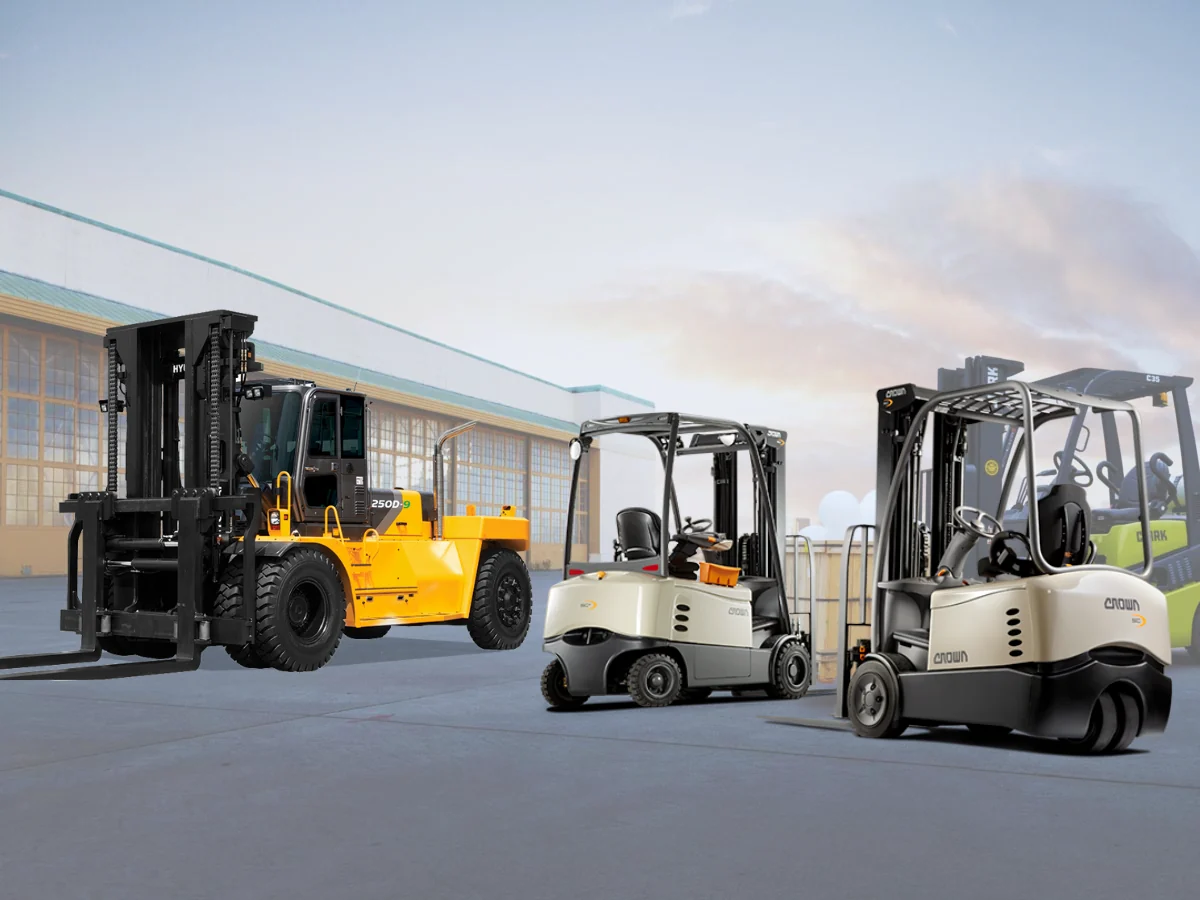
Electric forklifts are commonly considered for indoor environments and operations where low local emissions are important. Diesel forklifts are frequently evaluated for outdoor applications involving demanding working conditions and substantial material-handling requirements.
This guide compares both types to help businesses make an informed equipment investment.
What Is a Forklift?
A forklift is an industrial lifting vehicle designed to raise, lower and transport loads over relatively short distances. It is commonly equipped with two front-mounted forks that engage pallets or compatible load supports.
Forklifts are used in logistics, warehousing, manufacturing, retail distribution, construction and other industries where goods and materials need to be moved.
Forklifts are available in different configurations, lifting capacities and power systems. The choice of equipment should reflect the load dimensions, operating environment, lifting height, floor conditions and frequency of use.
What Are Electric Forklifts?


Electric forklifts use rechargeable battery systems to power their drive and lifting functions. Depending on the design, they may use lead-acid or lithium-ion battery technology.
These machines are widely considered for warehouses, distribution facilities and manufacturing environments where indoor operation and reduced local exhaust emissions are important considerations.
How Electric Forklifts Operate
An electric forklift draws power from its battery to operate the drive motors and hydraulic systems. The battery must be recharged according to the manufacturer's requirements and the operating schedule.
Charging arrangements, battery capacity and charging duration vary depending on the forklift model and battery technology.
Advantages of Electric Forklifts
- No exhaust emissions at the point of use: Electric forklifts do not produce engine exhaust emissions during normal operation.
- Indoor operating suitability: They are commonly selected for suitable warehouse and indoor environments.
- Reduced operating noise: Electric drive systems can offer quieter operation compared with conventional diesel engines.
- Different battery technologies: Buyers may evaluate battery options according to operating requirements and charging arrangements.
- Potential maintenance advantages: Electric powertrains have fewer conventional engine-related service requirements, although battery and electrical systems still require maintenance.
Limitations of Electric Forklifts
- Charging infrastructure must be available and appropriate for the battery system.
- Operating schedules need to account for battery charging and availability.
- Battery replacement can represent a significant ownership expense.
- Performance and battery efficiency can be affected by temperature and operating conditions.
- Not every electric forklift is designed for demanding outdoor surfaces or challenging environments.
What Are Diesel Forklifts?
Diesel forklifts use internal combustion engines powered by diesel fuel. They are commonly considered for outdoor material handling, industrial operations and environments where a suitable electric charging arrangement may not be practical.
Depending on the model, diesel forklifts can be supplied in different lifting capacities and configurations for industrial applications.
How Diesel Forklifts Operate
A diesel engine supplies power to the forklift's drive and lifting systems. The machine requires an appropriate fuel supply, regular engine servicing and maintenance in accordance with manufacturer recommendations.
Advantages of Diesel Forklifts
- Outdoor applications: Diesel forklifts are commonly used in suitable outdoor industrial and material-handling environments.
- Refuelling: Refuelling can be relatively quick compared with a full battery charging cycle, subject to safe fuel-handling procedures.
- Extended operating schedules: Businesses may be able to support continued operations through appropriate refuelling arrangements.
- Industrial configurations: Diesel models are available in different capacities for a variety of material-handling requirements.
- Suitable outdoor performance: Certain models are configured for outdoor working surfaces and demanding operating environments.
Limitations of Diesel Forklifts
- Produce exhaust emissions during engine operation.
- Generally generate more operating noise than electric alternatives.
- Require regular engine and fuel-system maintenance.
- Fuel costs can affect overall operating expenditure.
- Indoor use may be restricted by ventilation requirements and applicable workplace rules.
Electric vs Diesel Forklifts: Key Differences
Both forklift types can support industrial material handling, but their power systems influence how they should be deployed. The following comparison highlights the main purchasing considerations.
| Consideration | Electric Forklift | Diesel Forklift |
|---|---|---|
| Power source | Rechargeable battery | Diesel engine |
| Exhaust emissions | No exhaust emissions at the point of use | Produces engine exhaust emissions |
| Operating noise | Generally quieter | Generally louder |
| Common applications | Warehouses and suitable indoor facilities | Outdoor and industrial operations |
| Energy supply | Battery charging infrastructure | Diesel fuel supply |
| Maintenance focus | Battery, electrical and hydraulic systems | Engine, fuel, transmission and hydraulic systems |
| Operating schedule | Must account for charging and battery availability | Must account for refuelling and servicing |
| Indoor suitability | Often suitable where the facility and machine permit | Depends on ventilation, emissions controls and workplace rules |
| Outdoor suitability | Depends on model, battery and environmental conditions | Commonly used in suitable outdoor conditions |
Actual performance, lifting capacity, energy consumption and maintenance requirements vary between manufacturers and models. Always compare the technical specifications of the individual machines under consideration.
Which Forklift Is Better for Your Working Environment?
Warehouses and Distribution Centres
Electric forklifts are often a strong option for warehouses and distribution facilities, particularly where indoor air quality, noise and frequent material handling are important considerations.
Buyers should evaluate aisle dimensions, turning radius, lifting height, load capacity and battery charging arrangements.
Manufacturing Facilities
Manufacturing operations may benefit from electric forklifts where material handling takes place indoors and charging can be integrated into the facility's operating schedule.
The selection should account for production schedules, load types, floor conditions and equipment availability requirements.
Construction Sites
Suitable diesel forklifts may be considered for construction environments involving outdoor material handling and working surfaces that require an appropriately configured machine.
Ground conditions, load dimensions, travel distances and site access should all be assessed before selecting equipment.
Industrial Yards and Outdoor Storage
Diesel forklifts are commonly evaluated for industrial yards and outdoor storage operations. Electric alternatives may also be suitable when the model is designed for the environment and charging arrangements are practical.
Electric vs Diesel Forklift: Which Is More Cost-Effective?
The purchase price alone does not determine whether a forklift represents a good investment. Businesses should compare the total cost of ownership over the expected period of use.
Initial Purchase Cost
Compare the purchase price of machines with similar lifting capacities, mast configurations, attachments and specifications. Battery technology, included equipment and manufacturer options can affect the price of electric models.
Energy and Fuel Costs
Electric forklifts require electricity for charging, while diesel models require diesel fuel. The actual cost difference depends on local electricity tariffs, fuel prices, machine efficiency, operating hours and workload.
Maintenance Expenditure
Electric forklifts generally have fewer conventional engine-related service requirements. However, batteries, electrical components, tyres, hydraulics and other systems still need appropriate maintenance.
Diesel forklifts require regular engine-related servicing, including attention to oil, filters, fuel systems and cooling components.
Battery Replacement and Charging Infrastructure
Electric forklift ownership should account for battery lifespan, replacement costs, charging equipment and the electrical infrastructure needed to support the operation.
Downtime and Productivity
Consider how much downtime could affect daily operations. A business running several shifts may need battery-management arrangements or additional equipment to maintain availability.
Diesel refuelling may be convenient for certain operating schedules, but fuel availability and maintenance downtime also need to be considered.
How to Choose the Right Forklift for Your Business
The most appropriate forklift is the one that matches the loads, working environment and operating schedule of the business.
1. Establish the Required Lifting Capacity
Determine the maximum load weight and the dimensions of the goods being handled. Consider the load centre and the effect of any attachments on the forklift's rated lifting capacity.
2. Determine the Required Lifting Height
Review the height of storage racks, loading platforms and stacking areas. The selected mast configuration must meet the required lifting height while respecting the machine's rated capacity.
3. Assess the Operating Environment
Consider whether the forklift will operate indoors, outdoors or across both environments. Review floor surfaces, ventilation, access restrictions and environmental conditions.
4. Review Daily Operating Hours
Establish how many hours the forklift is expected to work each day and whether operations run across multiple shifts. This will help determine whether battery charging or refuelling arrangements are appropriate.
5. Check Manoeuvrability
Measure aisle widths, turning spaces, loading areas and access routes. A forklift must be able to manoeuvre safely within the intended working environment.
6. Consider Operator Requirements
Review visibility, control layout, seating, entry and exit arrangements and operator comfort. Ensure operators are appropriately trained and authorised for the equipment.
7. Evaluate Maintenance Support
Consider access to replacement parts, qualified technicians, servicing facilities and manufacturer support.
Essential Forklift Specifications to Compare
Beyond the choice of electric or diesel power, buyers should carefully examine the technical specifications of each forklift.
Rated Load Capacity
The maximum rated load under specified conditions. Always consider the load centre and attachment configuration.
Lifting Height
The maximum height supported by the specified mast configuration and operating conditions.
Mast Configuration
Different mast arrangements affect lifting height, collapsed height and operational clearance.
Load Centre
An important measurement influencing the forklift's rated lifting capacity and load stability.
Turning Radius
Helps determine whether the forklift can manoeuvre within available working spaces.
Tyres and Ground Clearance
Important for assessing suitability for warehouse floors, industrial yards and outdoor surfaces.
Forklift Safety and Maintenance Considerations
Forklift operation involves lifting loads, manoeuvring around people and equipment and working in environments where visibility and stability are important. Appropriate training, inspections and maintenance are essential.
Routine Inspection Areas
- Forks, mast, carriage and lifting chains.
- Tyres, wheels and steering components.
- Braking system and parking brake.
- Hydraulic hoses, cylinders and connections.
- Warning devices, lights and operator controls.
- Battery condition and charging connections on electric models.
- Engine, fuel system and cooling components on diesel models.
Safe Operating Practices
- Use trained and authorised forklift operators.
- Respect the rated capacity and load centre.
- Keep loads stable and correctly positioned.
- Maintain clear visibility and suitable travel speeds.
- Follow site traffic management procedures.
- Use designated pedestrian and equipment routes.
- Follow the manufacturer's operating instructions.
Maintenance intervals should be based on the specific forklift's operating manual and working conditions. For additional equipment-care guidance, see our machinery maintenance guide .
Forklift Buying Checklist for Businesses
Before investing in an electric or diesel forklift, consider the following points.
- Identify the main material-handling application.
- Confirm the maximum load weight and dimensions.
- Determine the required lifting height.
- Review the forklift's rated load capacity.
- Assess the load centre and attachment requirements.
- Establish whether indoor or outdoor operation is required.
- Measure aisle widths and turning areas.
- Calculate expected daily operating hours.
- Compare electricity or fuel costs.
- Review battery charging or refuelling arrangements.
- Check maintenance and spare parts availability.
- Confirm operator training requirements.
- Review warranty terms and documentation.
- Compare transport, delivery and total ownership costs.
Frequently Asked Questions About Electric and Diesel Forklifts
1. Which is better, an electric or diesel forklift?
Neither is universally better. Electric forklifts are commonly considered for suitable indoor environments, while diesel forklifts are frequently evaluated for outdoor and demanding industrial applications. The best option depends on the business's operating requirements.
2. Are electric forklifts suitable for warehouses?
Yes. Electric forklifts are commonly used in warehouses because they produce no exhaust emissions at the point of use and generally operate more quietly than diesel alternatives.
3. Can diesel forklifts be used indoors?
Indoor use depends on ventilation, exhaust emissions, workplace requirements and the specific machine. Do not assume a diesel forklift is suitable for an enclosed facility without assessing these factors.
4. Are electric forklifts cheaper to operate?
They can have lower energy and certain maintenance costs in suitable applications, but the outcome depends on electricity tariffs, battery costs, operating hours and maintenance requirements.
5. How long does an electric forklift battery last?
Battery lifespan depends on battery technology, usage, charging practices, temperature and maintenance. Refer to the battery manufacturer's specifications for the particular system.
6. Which forklift is better for outdoor use?
Diesel forklifts are commonly selected for suitable outdoor industrial applications. However, some electric models are also designed for outdoor use. Check the machine's tyres, ground clearance, environmental protection and manufacturer guidance.
7. Do electric forklifts require maintenance?
Yes. They require inspections and maintenance of batteries, electrical systems, tyres, hydraulics, brakes and other components.
8. What is the most important forklift specification?
Rated load capacity is a fundamental consideration, but it must be assessed alongside load centre, lifting height, mast configuration and the intended operating environment.
9. Can a forklift lift more than its rated capacity?
A forklift must be operated within its rated capacity and applicable load-chart limits. Attachments and load positioning can reduce available lifting capacity. Never exceed the manufacturer's specified limits.
10. Where can I enquire about forklifts?
Contact Braethorn Machinery to discuss your material-handling requirements, preferred power system and equipment purchasing options.
Choosing the Right Forklift Is a Business Investment
Electric and diesel forklifts both provide practical material-handling solutions, but their operating characteristics make them suitable for different working environments.
Electric forklifts can be an attractive option for suitable indoor operations where charging infrastructure and battery management can be integrated into the working schedule. Diesel forklifts remain an important option for suitable outdoor and industrial applications where fuel-powered equipment meets operational requirements.
By comparing lifting capacity, operating hours, energy costs, maintenance, infrastructure and site conditions, businesses can make a more informed equipment investment.
Looking for the Right Forklift for Your Business?
Discuss your warehouse, logistics or industrial material-handling requirements with Braethorn Machinery. Enquire about suitable electric and diesel forklift options for your operation.
Contact Us